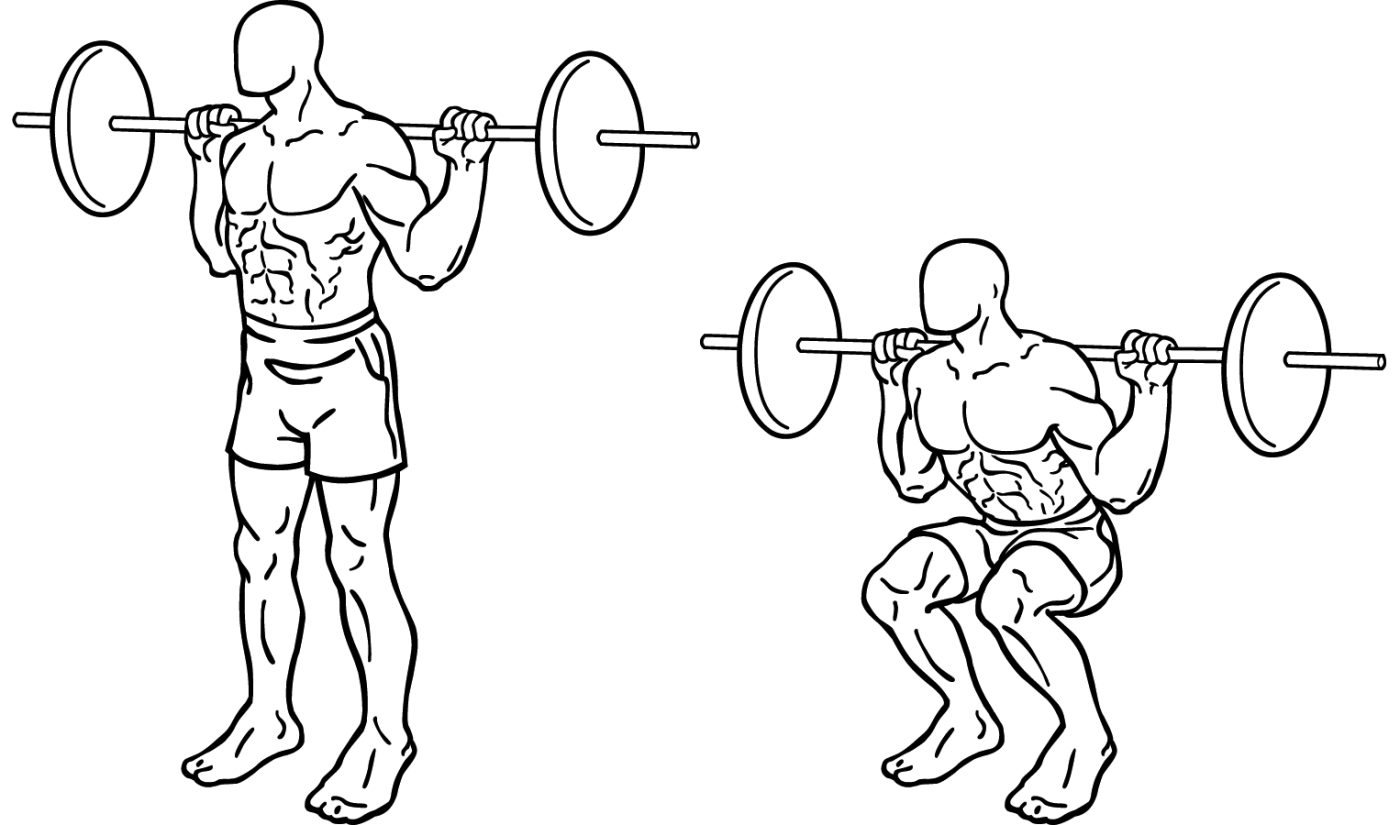
In this article, I will explain the proper technique behind a barbell back squat according to the basics of strength and conditioning manual published by the Nation Strength and Conditioning Association.
The Objectives of a Barbell Back Squat
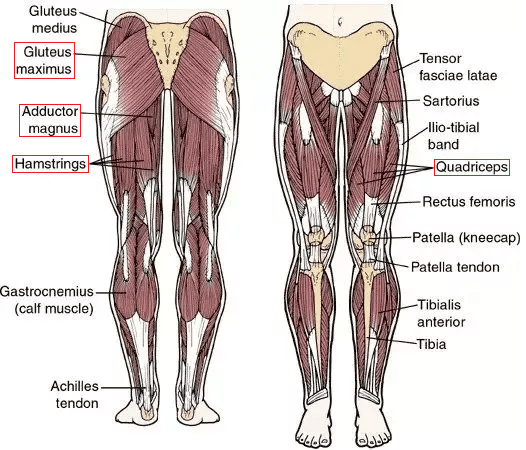
In a barbell back squat, the muscles that are intended to be developed if completed correctly are the quadriceps, thigh abductors, gluteus maximus, and hamstrings.
Starting Position
To begin a back squat, load the desired weight onto the barbell, which should be positioned low enough so that you are able to pick it up using your back. Once you’ve loaded your desired weight, stand with your shoulders underneath the center of the bar, if this isn’t done, then there will be improper balance across the bar while doing the squat.
Afterwards, ensure that your entire body is underneath the bar in order to give yourself the stability needed to properly lift the bar. Inhale before lifting the bar, and hold until your have set up completely. Once you have lifted the bar, step backwards slightly so that you can set up your form.
Grip
The barbell should be gripped with a closed, pronated (downwards facing) palm. Your grip should also be comfortably close to your body in order to activate your back muscles, which in turn will activate the lats, will drive your elbows forward, and will result in a puffed-out chest. Without back engagement, the weight of the bar will push your chest forward and away from your center of mass, therefore resulting in the bar being pushed away from your center of mass. This shifts the focus of your muscles from your legs to your lower back, which can result in back pain.
The width on your grip also depends on your mobility and flexibility, so only you will be able to find the best grip width that will both activate the back and feel comfortable.
High Bar vs. Lower Bar
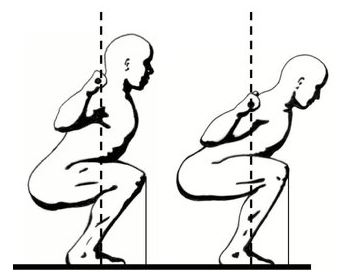
A high bar squat is when you let the bar lie across the top of your trapezius muscles, which is nearby to the base of the neck. This has been observed to increase the force at the knees. This increased force results in a greater activation of the anterior muscles, namely the quadriceps.
A low bar squat is when you let the bar lie around 1 to 2 inches below your deltoids. This position has been observed to increase the force at the hips. This increased force results in a greater activation on the posterior muscles, which includes the gluteus maximus and hamstrings.
In conclusion, the decision between using a high bar or low bar placement is dependent on if you would like to work anterior or posterior muscles more.
Head Position
At the beginning and throughout the rest of the squat, your head and eyes should face forwards, in order to keep the cervical spine in line with the body, which maintains your body weight distribution throughout the squat. If you were to tilt your head forwards, your weight will be shifted towards the balls of your feet, resulting in a rounded back and excess stress to the body. In contrast, tilting your head too far back will result in your weight being shifted to the heels of your feet, resulting in an increased curvature to your spine and excess stress to the neck and back.
Foot Position
Throughout the squat your heels should be kept on the floor, with your feet pointed around 30 degrees pointed outwards from a neutral position. The width of the stance can vary depending on the particular muscles you wish to exercise.
A narrow stance will mainly work the quadriceps, with the gluteus maximus being worked to some extent.
A medium stance will also mainly work the quadriceps, but will work the adductors to some extent instead of the gluteus maximus.
A wide stance will work the adductors, the gluteus maximus, and the outer quadriceps.
NOTE: Working Abdominal Muscles
It should be noted that you should make abdominal work as a part of your regular strength-training routine, which works the abdominal muscles equally. This is due to strong abdominal muscles, especially the obliques, helping to maintain torso stability throughout the squat.
Torso Position
During the squat, your core should be engaged in order to maintain stability (as previously mentioned with the abdominal muscles.) Additionally, your back should remain straight throughout the entire squat. Your torso should be positioned between 35 and 45 degrees from an upright position, if you were to be in a position less than 35 degrees you would be too upright, and if you were to be in a position more than 45 degrees you would be leaning forwards too much.
Breathing
Prior to descent, you should inhale deeply and hold the breath in order to prevent bending forward, arching of the back, and passing out, it will also maintain tightness throughout the squat. While holding the breath throughout the squat, you should exhale the breath nearby, or at the top of your ascent. Between repetitions you should inhale and exhale normally.
The Descent
When you begin to descend, you should push your hips backwards, while simultaneously flexing your knees. You should also keep your knees behind the balls of your feet and your shins as vertical as possible.
The descent should be slow and controlled, with your body weight distributed throughout the entire foot; from your heel to the balls of your feet. When you reach the bottom of your squat, when the mid-thigh is parallel to the floor, you should not bounce, jerk, or stop the movement.
The Ascent
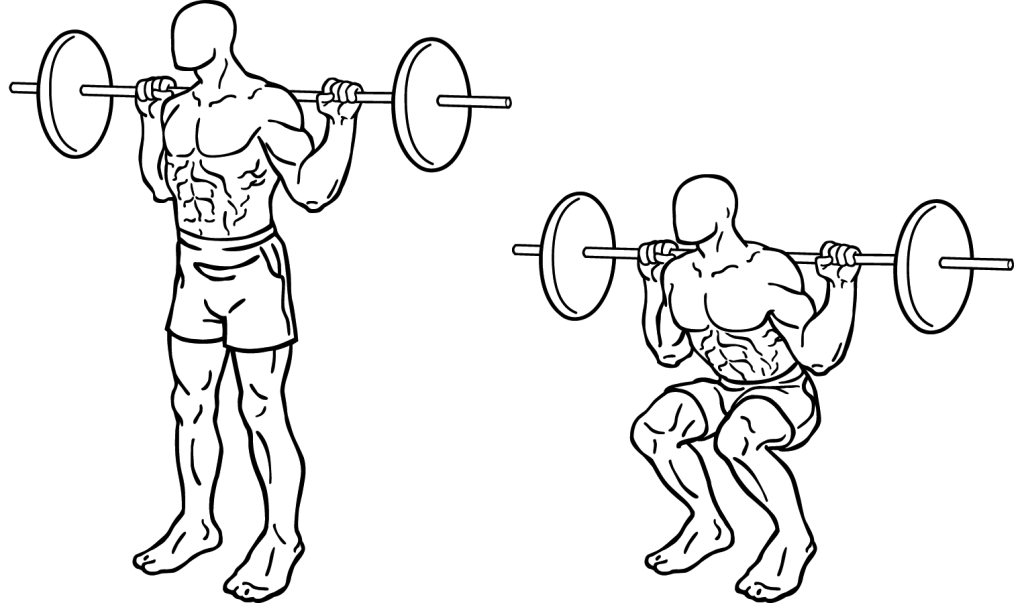
When you begin to ascend, you should drive you feet into the ground, while simultaneously raising your hips and shoulders. Push your shoulders slightly into the bar in order to keep your chest facing outwards. You should finish your ascent by standing erect, and back in your starting position.
Summary
You should pick up the barbell with your shoulders and entire body centered and directly underneath the bar, you should then proceed to slightly step away from where the bar was held. Your palms should be closed and pronated, with your grip width narrow enough to activate your back. Your head and eyes should be facing forwards, not leaning to far forwards or to far backwards. Your heels should be kept on the floor, with your feet being pointed around 30 degrees outwards from a neutral position. You should inhale deeply before your descent, and hold throughout, only exhaling near or at the top of your ascent. Your core should be activated, and its recommended that you work your abdominal muscles to maintain torso stability. Your torso should be positioned 35 to 45 degrees from an upright position.
During your descent, you should push your hips backwards, with your knees behind the balls of your feet and your shins vertical. The descent should be slow and controlled, with your weight distributed throughout your foot. When you reach the bottom of your descent, when your thigh is parallel to the ground, you should not bounce or stop movement. During your ascent, you should drive your feet into the ground while raising your hips and shoulders. Your shoulders should push into the bar in order to keep your chest facing outwards.
Your squat can deviate from others depending on which muscles you would like to emphasize. This can range from either a high-bar or low-bar position, or a narrow, medium, or wide foot stance.
Sources
Click to access basics_of_strength_and_conditioning_manual.pdf
High-Bar vs. Low-Bar Squats: What’s the Difference?
 Practice for the Powerful
Leave a comment